
SEMET Safety Update Mid 2026
Hello and welcome to another update using our latest safety data from April to June this year. Continuing reading below for some insight into latest events and how we may learn from them, keeping us as safe as we can be at SEMET!

Reporting Overview
A continuing solid reporting rate from us as a club over the most recent period. As always thank you to all those who contributed to the safety system during this time. The reports generated all help us to learn and move forward to a safer operation.
Reporting rate
Reporting target
Previous quarter
Same period last year
A higher reporting rate does not necessarily mean more unsafe events are occurring. It also reflects engagement with our reporting system and our willingness to share hazards, near misses and learning opportunities.
Reporting remained strong during Apr–Jun 2026 at 3.5% of movements, meeting our reporting target. Although slightly below the 4.1% recorded in the previous quarter, it remains above the 2.7% recorded during the same period last year. Across the first half of 2026, the reporting rate was approximately 3.7%.
Reporting Rate Trend
Over the most recent two years, reporting rates have generally strengthened following the lower level seen in summer 2025.
What Are We Reporting?
The mix of reports helps us understand where our shared safety learning is coming from. Figures are rounded to show the overall pattern while keeping underlying report volumes confidential.
| Report Category | Apr–Jun 2026 | Long-Term Profile | What This Shows |
|---|---|---|---|
| MAC – Mid-Air Collision / Airprox | ~25% | ~20% | More prominent this period |
| SCF – System / Component Failure | ~20% | ~30% | Lower than usual |
| ADM – Admin Errors | ~15–20% | ~10% | More prominent this period |
| LOC – Loss of Control | ~10–15% | ~5–10% | Slightly higher than usual |
| OPS – Flight Operations | ~10–15% | ~20% | Lower than usual |
| ARC / REI / GCOL | Each <5% | Lower-frequency categories | Remained relatively infrequent |
Percentages are rounded and are intended to show broad reporting trends rather than exact report volumes.
Safety Report Roundup
Below we have included a selection of our reports for the period April - June 2026. Think of ways you may be able to reduce the chances of similar occurrences in the future, or how you may react safely if it happens to you.
Many of the causes relate to the pilot competencies we discuss during training. Be sure to ask an instructor if you have any questions surrounding the training of competencies.
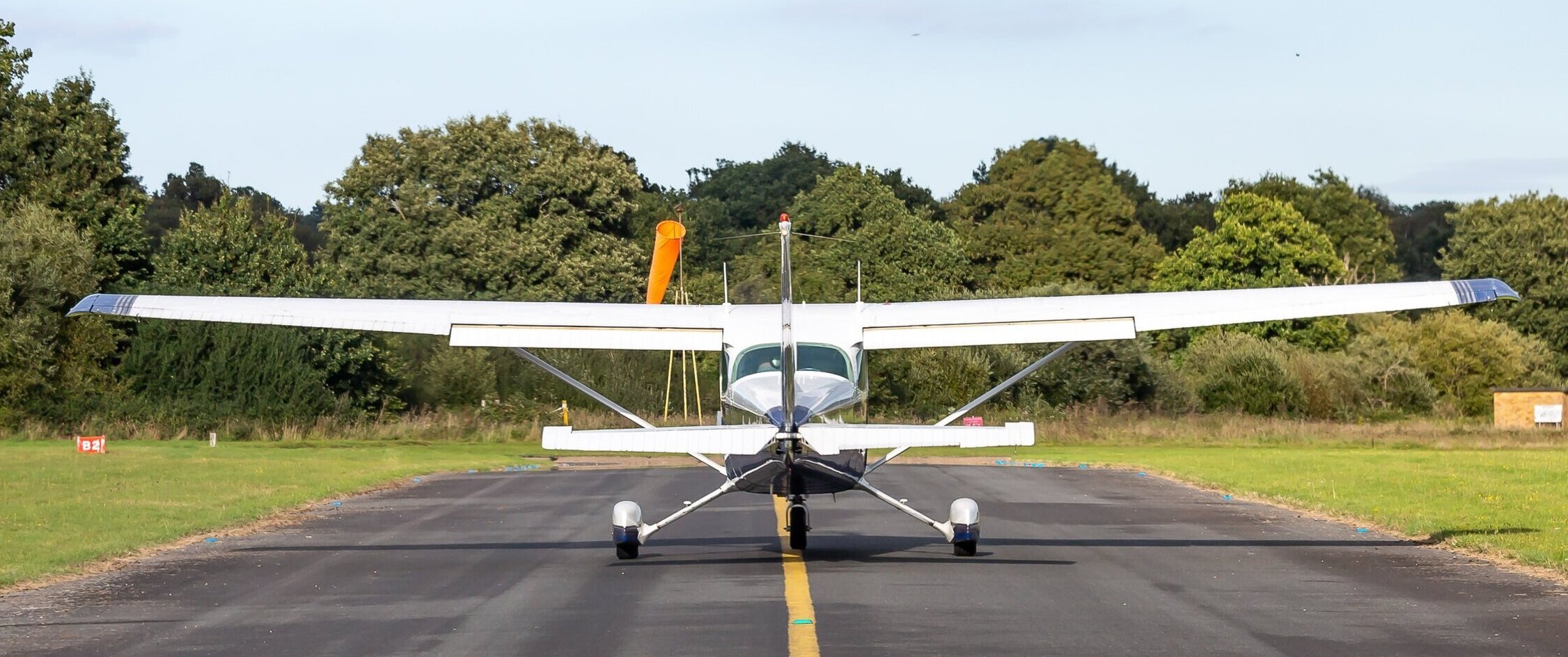
Learning From This Period's Reports
Statistics help us identify trends, but the greatest value comes from the individual reports themselves. The summaries below focus on what we can learn and apply, rather than on the individual involved in an occurrence.
LOC – Loss of Control
| Event | Learning / Safety Focus |
|---|---|
| Baggage door opened after departure, prompting an immediate return | Highlights the importance of confirming that baggage doors are both latched and flush before departure, particularly after accessing the baggage area |
| Aircraft became briefly airborne at low speed during a gusty take-off before settling back onto the runway | Useful learning around the effect of gusts on indicated airspeed and the value of allowing an appropriate margin and establishing a stable take-off roll in gusty conditions |
| Loss of directional control during a baulked landing/go-around, requiring instructor intervention | Reinforces the value of practising go-arounds and baulked landings, particularly where pilots have had limited recent exposure to these manoeuvres |
MAC – Mid-Air Collision / Airprox
| Event | Learning / Safety Focus |
|---|---|
| Circuit disruption associated with operation of an electric aircraft, requiring other traffic to hold outside the ATZ | Reinforces the importance of normal circuit discipline and clear communication when aircraft with differing performance are operating together. Unusual performance does not in itself confer priority, so pilots should continue to integrate safely with established traffic and be prepared to adjust spacing or go around if required |
| Close proximity between aircraft during a dead-side descent | Reinforces the importance of active lookout during joins and awareness of aircraft blind spots, particularly where arriving and departing traffic is concentrated into similar areas |
| Conflict with IFR traffic on short final while established circuit traffic was turning final | Highlights the value of maintaining flexibility and a strong lookout even when established in the circuit, particularly during busy periods or where traffic information may be received late |
| AIRPROX with approximately 100 ft vertical separation south of Reading | Reinforces the importance of lookout in busy training areas and the value of correctly configured electronic conspicuity as an additional aid rather than a replacement for visual acquisition |
| Suspected drone encountered overhead Reading | Raises awareness of the potential for unexpected drone activity and the importance of reporting encounters so that wider trends can be identified |
SCF – System / Component Failure or Malfunction
| Event | Learning / Safety Focus |
|---|---|
| Cluster of reports of rough engine running across aircraft | Demonstrates the value of reporting apparently similar technical events, allowing patterns to be identified and investigated rather than considering each occurrence in isolation |
| Significant engine roughness and reduced power during return to base | Demonstrates effective precautionary decision-making and reinforces the importance of early reporting and engineering investigation of abnormal engine behaviour |
| High oil temperature and reducing oil pressure during flight in very hot conditions | Highlights the effect environmental conditions can have on aircraft performance and the importance of monitoring engine indications closely during unusually high temperatures |
| Repeat high oil temperature during operation in high ambient temperature | The repeat report provided useful evidence for further engineering investigation and demonstrates the value of continued reporting where an issue reoccurs |
| Coolant warning followed by evidence of coolant leakage after landing | Reinforces the value of responding conservatively to abnormal indications and ensuring technical defects are investigated before further flight |
ADM – Administration
| Event | Learning / Safety Focus |
|---|---|
| Self-hirer identified as having flown after expiry of SEP rating | Highlighted an opportunity to make rating validity and revalidation requirements more visible and to strengthen awareness of expiry dates |
| Second hirer identified as being unfamiliar with SEP revalidation/renewal requirements | Reinforced the value of communicating revalidation requirements more widely rather than assuming all members will have the same familiarity with UK licensing processes |
| Trial lesson booking would have exceeded aircraft mass limits with planned passengers | Highlighted the value of considering aircraft payload limitations at an early stage when planning flights involving passengers |
| Proposed flight identified as approximately 80 lb overweight before departure | Useful reminder of the importance of using aircraft-specific mass and balance data and of checking the source of figures used by flight-planning software |
REI – Runway Excursion / Incursion
| Event | Learning / Safety Focus |
|---|---|
| Departure conducted with an estimated 5–10 kt tailwind, resulting in reduced climb performance | Highlights the importance of considering actual conditions independently of the nominated runway and retaining the option to delay or request an alternative where conditions are unfavourable |
OPS – Flight Operations
| Event | Learning / Safety Focus |
|---|---|
| Aircraft taxied to the fuel pumps with tie-downs still attached | Highlights the value of resolving unusual ground-handling issues before aircraft movement and seeking assistance where equipment cannot readily be removed |
| Aircraft flown over the Yateley Noise Abatement Area | Provided a useful opportunity to reinforce local joining and noise-abatement procedures using the Blackbushe Airport Rules and Procedures documents |
| Aircraft found inadequately secured following stormy weather | Highlighted an opportunity to improve familiarity with the correct use of aircraft securing equipment, particularly before adverse weather |
| Race cars operating on the runway without a published NOTAM | Highlighted the importance of effective information sharing where unusual aerodrome activity may affect normal flying operations |
GCOL – Ground Collision / Ground Safety
| Event | Learning / Safety Focus |
|---|---|
| Aircraft found without chocks and with parking brake off following stormy weather | Reinforces the importance of consistent aircraft securing and provides a useful reminder of why the procedure matters during strong winds |
ARC – Abnormal Landing
| Event | Learning / Safety Focus |
|---|---|
| Unstable approach resulted in heavier braking and reported smoke from a main wheel | Reinforces the importance of recognising an unstable approach early and keeping the go-around readily available as the normal alternative |
Common Learning Themes
Below we have highlighted some common learning themes from the reports and can link them to our common pilot competencies we teach.
The ‘What We Can Take From This’ column highlights practical learning from reported events, with the aim of helping all members strengthen their own decision-making, awareness and operating habits.
| Club Pilot Competency / Theme | Common Learning Theme | What We Can Take From This |
|---|---|---|
| Situation Awareness (SAW) & Workload Management (WLM) | A number of reports show how changing conditions, traffic, workload or competing priorities can reduce the capacity available to maintain the wider picture | Keep actively reassessing what is happening around you, particularly when workload increases. Prioritise tasks using A-N-C, Aviate → Navigate → Communicate |
| Application of Knowledge (KNO) | Several reports highlighted the importance of having the right knowledge available at the point it is needed, including aircraft limitations, licensing requirements, weather effects and local procedures | Refresh areas that are unfamiliar or not used regularly, check rather than assume, and make use of instructors, briefing material and aircraft-specific information available around the clubhouse in the form of POH/AFMs (aircraft manuals) |
| Application of Procedures & Compliance with Regulations (PRO) | Some occurrences provide useful reminders of the protection offered by routine procedures, checklists and regulatory requirements | Continue to use established procedures consistently, particularly during familiar or apparently straightforward tasks where it can be easiest for a step to be missed. Club Procedures are available in the Flight Ops Manual on the shared member's drive |
| Problem Solving & Decision Making (PSD) | Several reports involved changing or unexpected circumstances requiring pilots to reassess the original plan and decide on a safe course of action | Keep alternative options available and be willing to change the plan early. Returning, going around, delaying, asking for assistance or stopping an activity are all normal tools for managing developing threats |
| Communication (COM) & Leadership & Teamwork (LTW) | Some events show how safety can depend on information being shared clearly between pilots, instructors, Ops, engineering and other aerodrome users | Speak up when something appears unclear or unexpected, share relevant information with others (safety reports/defects) and make use of the wider team when another perspective or assistance may help |
| Flight Path Management - Manual (FPM) | A smaller number of reports involved aircraft control, approach stability, take-off technique or maintaining an appropriate flight path in changing conditions | Maintain appropriate margins, recognise when the aircraft or approach is moving away from the intended profile, and use a gate for the decision to go around, e.g. @200' AGL stable, otherwise a go-around must be made |
| Technical Reliability | Technical reports continue to provide valuable information about developing or recurring aircraft defects | Treat unusual indications, noises, smells or changes in aircraft behaviour as worth reporting. Conservative decisions and early reporting help identify problems before they become more significant, following the club defect reporting process |
Further Learning - Collision Avoidance
With MAC events featuring more prominently this period, it is a good opportunity to refresh our awareness of collision-avoidance techniques and the practical steps we can all take to reduce the risk of mid-air conflict.
The CAA’s Safety Sense: Collision Avoidance leaflet provides practical guidance on reducing the risk of mid-air collision, including effective lookout and maintaining situational awareness.
Safety Focus: Unstable Approaches
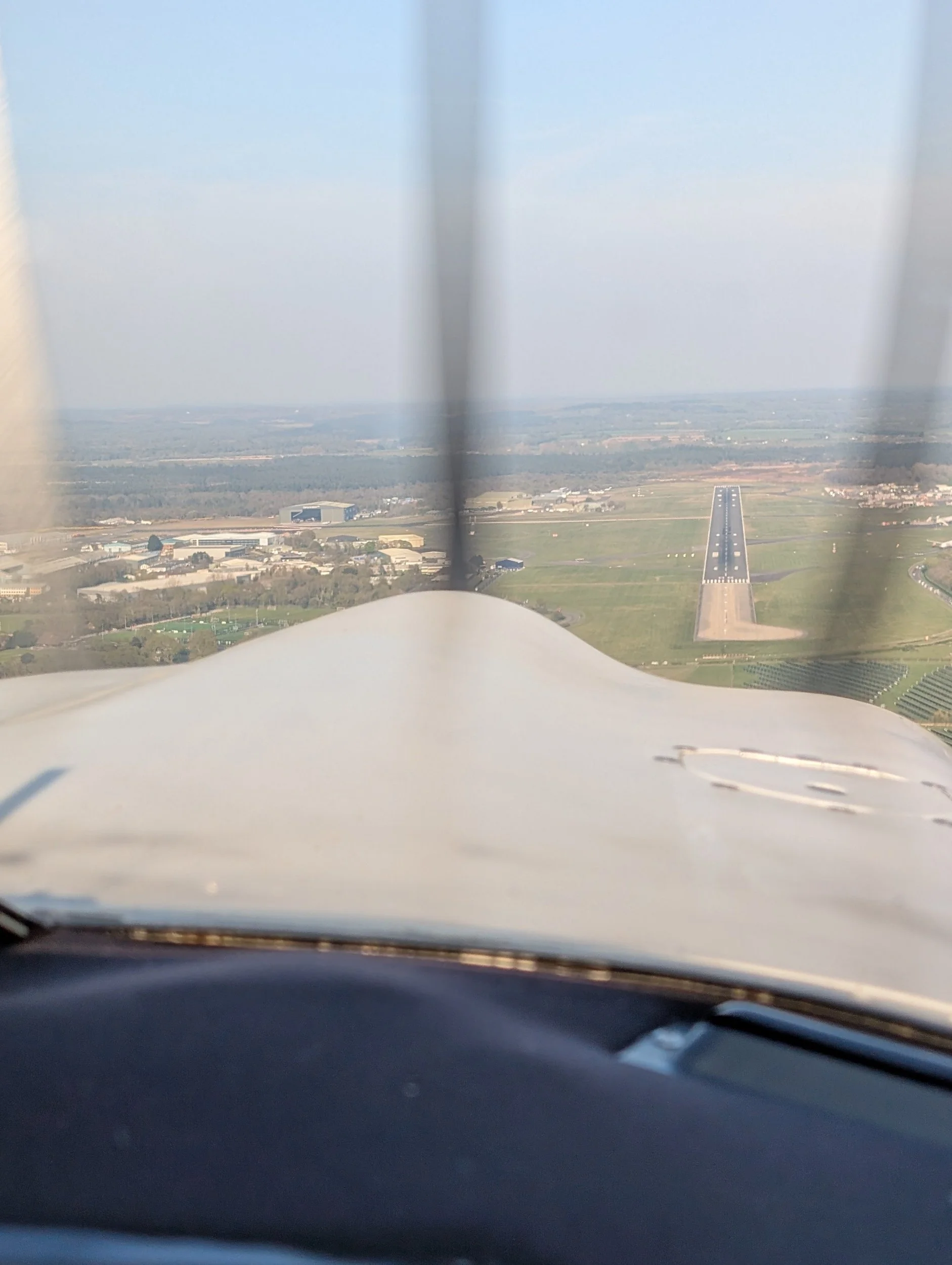
A recent SEMET report gives us a useful opportunity to look at how we manage the final part of every flight — the approach and landing.
Most of the aircraft we fly at SEMET are relatively forgiving when it comes to managing energy. Compared with larger, faster aircraft, they can usually lose speed and height quite readily. However, this can sometimes make it tempting to continue an approach that is not quite working, with the expectation that it can still be corrected before touchdown.
A safe landing starts with a stable approach. If the aircraft is not in the right place, at the right speed and requiring normal control inputs as we get close to the ground, our available margins reduce quickly.
What is an Unstable Approach?
A stable approach is one where the aircraft is established on the intended flight path, correctly configured and at an appropriate speed, requiring only small corrections to continue to a normal landing.
An approach can be considered unstable when one or more of those conditions are not being met. Examples include:
- Being significantly too high or too low
- Being too fast or too slow
- Not being correctly aligned with the runway
- Having an unusually high rate of descent
- Still making significant changes to power, pitch or configuration close to the ground
- Needing increasingly large corrections simply to keep the approach going
A particularly useful warning sign in our aircraft is reaching 200 ft AGL with the power still at, or close to, idle because we are trying to recover from being too high. At that point, we are still correcting the approach rather than simply maintaining a stable one.
An unstable approach does not necessarily mean the aircraft is immediately unsafe. It means that the margins which normally make the landing predictable are being reduced, and the safest option may be to reset the situation with a go-around.
What are the Threats of an Unstable Approach?
The closer we get to the runway, the less time and height we have available to correct things.
A high-energy approach — typically too high, too fast, or both — can lead to:
- Floating further along the runway
- Touching down faster than planned
- Reduced runway remaining
- Heavier braking
- Increased risk of tyre or brake damage
- Runway excursion
- Hard or poorly controlled touchdowns when trying to force the aircraft onto the runway
A low-energy approach brings a different set of risks:
- Airspeed approaching the stall
- Excessive sink rate
- Reduced ability to respond to gusts or windshear
- Hard landing or touchdown short
- Increased workload at the point where there is least time available
There is also an important human-factors threat. Once we become committed to landing, it can be surprisingly easy to continue making corrections rather than abandon the approach. Each additional correction increases workload and can make the next problem harder to recognise.
A go-around removes that pressure. It gives us another circuit in which to reset the aircraft, reassess the conditions and establish a normal approach.
By 200 ft AGL, the aircraft should already be configured for landing. At the gate, make a quick three-part check:
If not, GO AROUND.
The purpose of the call is not simply to say the words. It gives us a deliberate decision point and a clear defence against continuing an approach which we are still trying to recover.
If the aircraft is not in the right place, at the right speed or requiring a normal amount of power, we cannot confidently call the approach stable. The go-around then gives us another opportunity to establish a safe, normal approach.
What Happened During Our Recent Event?
During the reported event, the approach was described as high and fast. Following touchdown, heavier-than-normal braking was required and the FISO reported seeing smoke from a main wheel during the landing roll, potentially associated with heavy braking or a brief wheel lock.
The available ADS-B information indicates that the aircraft was still carrying considerably more energy than intended around the height at which we would now make our 200 ft stable approach check.
It is important to remember that ADS-B groundspeed is not the same as indicated airspeed, so any estimate of cockpit IAS from this information can only be approximate. However, the available information supports the wider learning that the approach had not stabilised sufficiently by this stage.
Applying the 200 ft gate would have provided a clear trigger to go around rather than continue trying to recover the approach, giving another opportunity to establish the aircraft at the normal speed, configuration and flight path.
Further Reading
Find below reading in relation to extra guidance from the CAA and an AAIB investigation showing the consequences of trying to land from an unstable approach

AAIB Annual Safety Review 2025
The AAIB’s 2025 Annual Safety Review was published in June and provides a useful overview of the accidents, serious incidents and safety themes identified during the year. It is well worth a read for anyone interested in learning from real-world occurrences and understanding the wider safety lessons being seen across UK aviation.
Especially relevant is General Aviation (Fixed Wing) pages 98-107.

Just Culture at SEMET
Our Just Culture recognises that, as humans, we will all make mistakes from time to time. What matters is that those mistakes can be reported openly so that we can learn from them and reduce the chance of the same thing happening again.
Members should feel comfortable reporting events that include their own unintentional errors, without fear of judgement or blame. SEMET will aim to support the individual involved and, where useful, provide further guidance, training or learning opportunities.
A strong reporting culture depends on people feeling safe to speak up. If pilots believe they may be criticised or penalised for honest mistakes, important safety information can be lost.
Our Just Culture therefore distinguishes between unintentional error and behaviour involving deliberate rule-breaking, recklessness or significant negligence. Honest mistakes should be treated as opportunities to learn, not reasons to punish.
Further Reporting
As always, thank you to all those that have submitted reports over the latest quarter. As you can see, each report really does help us improve. Through increased trend analysis we can ensure we take safety action where necessary.
We have really picked up on the reporting rate in recent times, lets keep this up by continuing to report anything that affects safety.

SEMET SMS form
How Do I Report?
QR codes can be scanned from the clubhouse walls
Access via Member’s Portal section of the website
Direct link via the button below:
Any other questions, you can contact the safety team via email: safety@semetaviation.co.uk
The more we know, the safer we grow. Whether it’s something that made you uncomfortable, a near-miss, or a system quirk—if it catches your attention, it’s worth reporting.
We are only as safe as you makes us.