SEMET Safety Update – 2025 into 2026
Some positive trends to discuss as we’ve moved into 2026. Continuing reading below for insights into our reporting stats and how we are using these and specific events to help increase safety for our flying club.

Reporting Overview
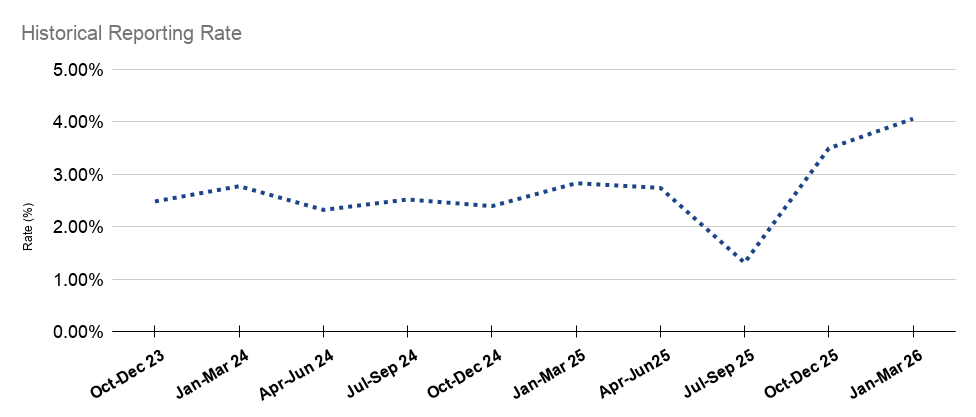
SEMET Aviation Safety reports rate as a percentage of movements
Fantastic to see an increasing rate over the last two quarters, showing a great response to lower reporting at the end of last summer.
The reporting rate for Oct–Dec 2025 increased to approximately 3.5% of movements, representing a significant rise compared to the previous quarter and exceeding the reporting target of 3.5%.
The reporting rate for Jan–Mar 2026 increased to approximately 4.1% of movements, representing a further improvement on the previous quarter and continuing the strong upward trend seen since late 2025.
This most recent quarter is the highest reporting rate we have and is testament to all those who have contributed to safety reporting recently. A big thank you from the safety team to those who have filed a report, it really demonstrates how engaged we are with improvements to safety at SEMET.
Report Categories


SCF - System / Component Failure or Malfunction
OPS - Flight Operations
LOC - Loss of Control
CFIT - Controlled Flight Into Terrain
MAC - Mid Air Collision
REI - Runway Excursion
GCOL - Ground Collision
ADM - Admin Errors
SFF - Smoke / Fire / Fumes
The above summary shows the percentage of reports that fit into each of our categories.
A quick reminder, that these reports will most often be near misses or events, that if not acted upon, could have resulted in the category title. E.g. an incorrect join in the circuit would be classified as MAC as this is the threat.
System/Component Failure Or Malfunction
Returning to our highest percentage category over the last 6 months SCF. A diverse group of reports, but encouragingly, the majority were issues picked up before they created a more severe occurrence airborne. This helps to show our diligence during pre-flight checks works.
One great catch was a PA28 during taxi out, a brake failure was noticed on the usual brake check and flight was abandoned. The aircraft was grounded until repaired.
A slight recurring theme involved how our aircraft are stored on the ground. We have since ensured we have pitot covers for all aircraft. In heavy rain we have been finding some water ingress in our aircraft, particularly affecting the PA28s.
We have covers for most of our aircraft and these are a great way to help prevent potential issues caused by rain when the aircraft are parked at Blackbushe. Covers also act to prevent sun damage from UV. UV degrades aircraft interiors and acrylic windshields and windows.
Consider the schedule and if you’re the last one flying the aircraft that day it may be appropriate to use the aircraft covers. This will help us all to keep our aircraft in the best shape possible.
New Category - Flight Operations (OPS)
Eagle eyed readers may notice we have lost the OTH - Other category, being now renamed as Flight Operations.
Practically not much has changed here. This safety report category serves to cover where reports don’t obviously fit in another category. Examples are infringements of controlled airspace (including near misses), human factors errors struggling to use equipment on board.
Safety Report Roundup
Below we have included a selection of our reports for the period October 2025 - March 2026. This is to help build awareness of events that do take place. It may be useful to reflect on what has occurred. Think of ways you may be able to reduce the chances of similar occurrences in the future, or how you may react safely if it happens to you.
Many of the causes relate to the pilot competencies we discuss during training. Be sure to ask an instructor if you have any questions surrounding the training of competencies.
GCOL – Ground Collision / Ground Safety
| Event | Contributory Factors |
|---|---|
| Aircraft taxied without clearance during long IFR setup | PIC distracted with checks; assumption student had called |
| Student taxied to incorrect run-up area despite briefing | Taxiway closure not fully understood; no chart onboard; relied on memory |
| Aircraft taxied at high speed towards parking area | Other pilot appeared not to slow down; poor airmanship |
| Aircraft found not tied down after previous flight | Normalised procedure; tie-downs not consistently used |
| Aircraft left unchocked and unsecured in windy conditions | Lack of awareness; common occurrence |
SCF – System / Component Failure
| Event | Contributory Factors |
|---|---|
| Fuel cap missing after flight (found later at pumps) | Cap likely not secured after refuelling; no retaining chain fitted |
| Rejected take-off due to low RPM indication (~2250) | Below expected POH figure; no clear fault found |
| Low RPM in climb leading to precautionary circuit | Very high carb icing risk on the day; no rough running noted |
| Electrical issue traced to alternator belt | Loose belt; intermittent charging observed |
| Starter/ammeter warnings intermittent over several flights | No fault found initially; aircraft sent early for maintenance |
| Brake failure identified during taxi/backtrack | Loss of braking on one side; only apparent during manoeuvre |
| Engine cowling unlatched on arrival | Missing fastener; likely worked loose during previous flight |
| Water found in cabin footwell | Aircraft not covered; heavy rain overnight |
| Water pooling in fuel tank | Long-standing issue; exposure to weather; defect reporting process |
| Shortage of pitot covers noted | Equipment availability; ops to review stock |
| Aircraft sitting wing-low due to ground erosion | Parking surface degraded; fuel migrating between tanks |
MAC – Mid-Air Collision / Airprox
| Event | Contributory Factors |
|---|---|
| Joining aircraft approached diagonally into circuit causing conflict | Non-standard join; closing from behind/above |
| Student navigated towards Odiham thinking it was destination | Incorrect identification; timings not cross-checked |
| Aircraft joined tight inside downwind causing spacing issues | Poor circuit discipline; limited situational awareness |
| Airprox event recorded, Midhurst VOR area | UKAB investigation to come |
OPS – Flying Operations
| Event | Contributory Factors |
|---|---|
| Aircraft entered restricted area after turning back due weather | Nav technique; loss of position awareness |
| Instructor entered restricted area during training detail | High workload managing instructional flight; distraction |
| IFR transit cleared into inappropriate airspace | Workload high; pilot/ATC communication |
| Perceived radio failure after take-off | Known defect awareness; background static |
| Loose items (batteries, rubbish, bottles) found in aircraft | Poor airmanship; aircraft not left as found |
ADM – Admin Errors
| Event | Contributory Factors |
|---|---|
| Vehicle using runway with no NOTAM issued | Information passed on frequency only; not formally published |
| Flight conducted without CRS paperwork onboard | Misunderstanding of requirements; communication breakdown |
LOC – Loss of Control
| Event | Contributory Factors |
|---|---|
| Loose pen in cockpit with potential to foul controls | Item left unsecured; housekeeping lapse |
| Aircraft departed with potential ice still on wing surfaces | Time pressure; clean wing concept misunderstood |
| Windshear on short final leading to high descent rate | Instructor complacency; low energy state; full flap configuration |
SFF – Smoke / Fire / Fumes
| Event | Contributory Factors |
|---|---|
| Smoke observed from vents during circuit | Possible oil residue or condensation; no fault reproduced |
CFIT – Controlled Flight Into Terrain (Risk Event)
| Event | Contributory Factors |
|---|---|
| Low-level flight (down to ~500ft AGL) to remain VMC | Weather worse than forecast; reliance on ground radar depiction |
REI – Runway Excursion / Incursion
| Event | Contributory Factors |
|---|---|
| Aircraft not covered leading to significant icing and windshield de-icing difficulty | Covers not used; repeated reports of same issue |
Typical Cause Themes
Below we have highlighted some common cause themes and how often they have applied to reports during the 6 month period. We have some club mitigations, which help to show what we can do to help to reduce the chances of the likelihood of these causes contributing to further events.
| Category | Frequency | Typical Cause | Mitigation Focus |
|---|---|---|---|
| Human Factors / Awareness / Distraction | ~40–45% | Reduced situational awareness, task focus, high workload, or attention being drawn to competing priorities | Reinforce prioritisation of flying tasks (Aviate > Navigate > Communicate), workload management, and TEM techniques to identify high workload/distraction early; encourage early recognition of overload and use of simple stabilising actions (e.g. pause, level off, trim, ask for help) |
| Human Factors / Knowledge & Training Gaps | ~20–25% | Nonstandard application of navigation techniques, aircraft systems, or operational procedures | Provide targeted refresher training (e.g. navigation, airspace, carb icing); standardise teaching points through instructor collaboration; promote use of briefing materials and post-flight debrief learning |
| Procedural / Discipline / Cultural Drift | ~15–20% | Inconsistent application of standard procedures, routine practices not always followed, or behaviours becoming normalised over time | Re-emphasise standard operation procedures adherence through safety briefings and instructor example; use reminders and light-touch monitoring to reinforce consistent standards |
| Technical / Defective Components | ~10–15% | Mechanical or component-related issues, including wear, failure, or limitations in equipment | Maintain proactive maintenance oversight using post maintenance club checks, encourage timely defect reporting, and track recurring issues to support preventative action |
| Process / Communication Weaknesses | ~10–15% | Gaps in information sharing, coordination, or clarity of processes across operations and support functions | Improve visibility of key information using new flightcloud system (e.g. aircraft status, NOTAMs), clarify responsibilities if unsure, and standardise communication between ops, instructors, and members |
Human Factors: Distraction In Flying
The above reports show a continual presence of human factors themes involved with safety events.
Readers of our previous update may remember we focused on human factors and reducing the risk when they become involved in aviation. For those who missed it, please find the Safety Sense leaflet below:

Case Study: Windshear on Final Approach
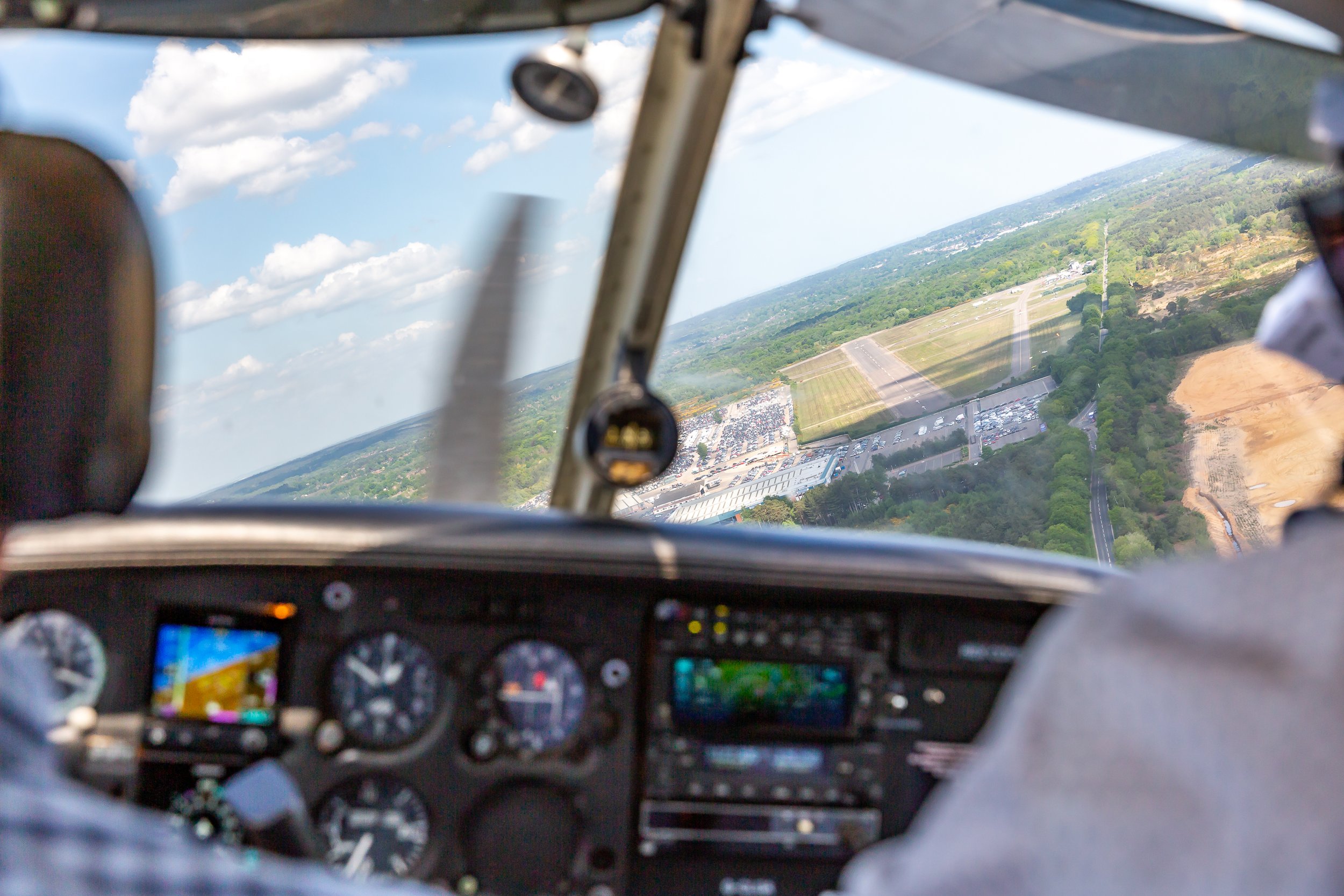
In March this year one of our aircraft whilst on a training flight encountered some significant wind shear and it was reported through our safety system and highlighted as one of our more significant events.
The pilot involved is able to share the experience from their point of view, with the aim for all to benefit from any lessons learned, primarily as that pilot was yours truly!
EGLK R25, windshear on short final at approx 300' AGL with a loss of 15kts airspeed and 200' vertically. I deemed appropriate that the student pilot should be flying for training value. The student was still at a pre-circuit stage of the PPL course. On setting up for approach after selecting full flap I prompted the aircraft were high on final, so the student pilot flying reduced power to almost idle to regain profile. The student pilot then raised the nose whilst already slightly slow (final approach speed -5kts) at the same time windshear occurred dropping aircraft into low energy situation. I immediately took control noticing a sharp drop in airspeed and a high rate of descent, following standard missed approach actions. In this very short period of time, with full power selected and a nose down attitude, it felt delayed before the energy started to build. I subsequently flew stall recovery actions on final after stall warner activation, even with full power selected and a nose low attitude angle of attack briefly remained high enough for stall warner activation.
I remember feeling uncomfortably close to the tops of the trees, well short of the runway, as we regained enough energy to climb away. There was a real temptation to pull back on the yoke earlier to raise the nose whilst in the descent with the tree line quickly rising to greet us. Here I feel it was critical I used what little height we had, to ensure the angle of attack did not increase further, avoiding a stall.
Subsequent circuit and landing flown with reduced flap setting and higher speed on final, windshear experienced again at same position but continued due to the imposed mitigation preventing unsafe loss of energy.
After landing, windshear reported to FISO via R/T.
Looking back now at the event I can now take away some well learned lessons. There was a strong wind warning forecast out for that afternoon which I was aware of and planned to monitor it with use of the METAR before departure and FISO wind information from Blackbushe. Just prior to departure the Farnborough METAR was showing a steady 14 knots of wind. On returning to Blackbushe I felt there was training value in allowing the student pilot to fly the approach as practice and this decision was confirmed by the FISO giving a south westerly wind at 12 knots (no gust noted) when we were on final. For me this felt as though a normal full flaps approach could be conducted so I allowed the student to fully configure.
In hindsight I would give the strong wind warning forecast much more respect as obviously it did come to fruition and affected the flight. Also having a moderate wind from the southwest in the same situation I would try and trap the threat by always flying the approach myself when with a less experienced student pilot, as well as using a reduced flap setting (flapless if required and good landing distance) and increased final approach speed. When I used these techniques on the second approach the flight path was robust enough to remain stable throughout and continue to land safely.
Conclusions
High rate of descent was experienced with recovery approximately 50' above treeline approx 0.5NM short of threshold. ADS-B recorded a descent rate of -1664fpm and 35KTS Ground Speed at point of windshear approx 300' AGL
METAR EGLF 241420Z 21011KT 9999 BKN014 11/08 Q1012
METAR EGLF 241450Z 21014KT 9999 BKN014 12/09 Q1011
METAR EGLF 241520Z 23020KT 9999 BKN013 11/09 Q1011
We occasionally have windshear events reported at Blackbushe that are similar to that above. Other windshear events have also reported winds on the day prevailing from a southerly direction. Note there’s potential for local structures/topography to have an effect here and moderate southerly winds should be considered a windshear contributor.
Many aircraft types allow for approaches to be flown with reduced flap settings and increased approach speeds to allow for safer margins in gusty wind conditions. Consult your POH/AFM for your aircraft type for more details. Alternatively a flight instructor will be able to discuss techniques with you around SEMET.
Hopefully the sharing of this incident helps highlights one threat to us and provokes thoughts on how you might approach a similar situation.
For further information on Loss of Control at take-off or landing refer to the CAA guidance below:
Industry Event Focus
This newsletter we’ll focus on a particularly unfortunate event that happened last year in the UK and was investigated by the UK Air Accidents Investigation Branch. Thank you to Alan one of our instructors who highlighted the accident report and how we at SEMET might learn from what happened here.
The report highlighted that the aircraft being over it’s maximum approve mass for take-off was a contributory factor to the accident.
Have a read of what happened here:

So what can we learn from this at SEMET? It’s imperative we remain within aircraft maximum weight and balance limits to ensure safety margins are kept.
For some general awareness we have some approximate numbers for our aircraft below:
| Aircraft Registration | Type | Remaining Useful Load with 2x85kg Adults and 10kg baggage |
|---|---|---|
| G-BSCZ | C152 | 24.5kg (54lbs) |
| G-BTMA | C172 | 165kg (364lbs) |
| G-CMFF | PA28 | 177kg (390lbs) |
| G-CMKJ | PA28 | 245kg (541lbs) |
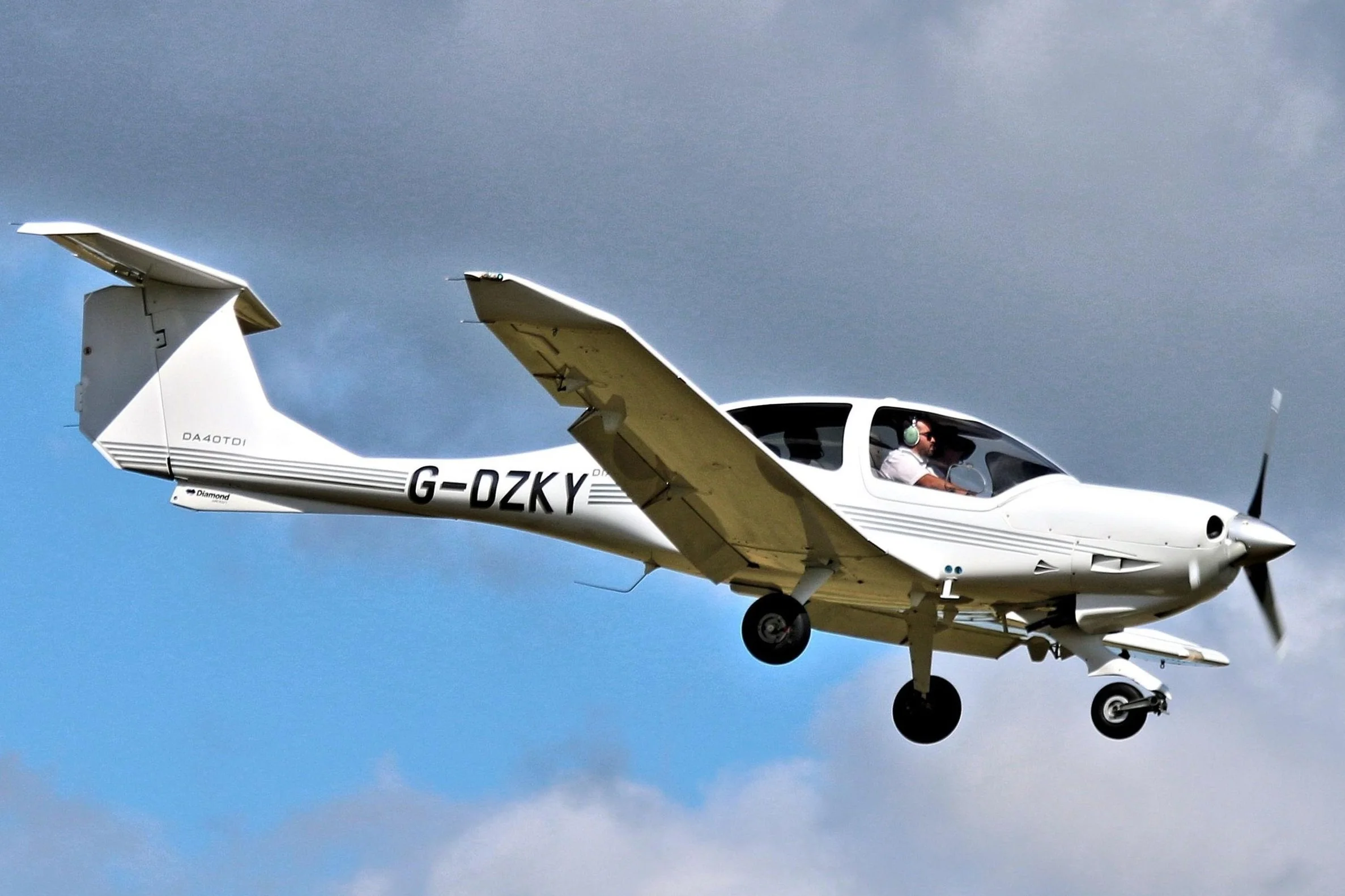
| G-DZKY | DA40 | 127kg (281lbs) |
Note: The above table should be used for awareness only and does not remove the responsibility for the Pilot in Command to calculate their own weight and balance data.
Interestingly C152 G-BSCZ (our heaviest C152 empty) only has enough useful load remaining to allow for aroung 9 USG of AVGAS to be loaded in this situation. That’s approximately only 30 mins of endurance before landing will be required to preserve 1 hour fuel remaining!
DA40 G-DZKY will take fuel fuel in this configuration but with another adult on board will be heavily fuel restricted. Additional consideration needs to be given to centre of gravity (CG) position for the DA40. Ballast will often be required in the rear baggage compartment to achieve an acceptable CG position. This further decreases useful load available.
C172 G-BTMA and PA28 G-CMFF can take full fuel in this configuration but with an additional adult on board, fuel will need to be sacrificed.
Our best load taker in this list by far is PA28 G-CMKJ due to a higher approved Maximum Take-Off Weight (MTOW).
If you do have any further weight and balance questions or anything to do with the accident above feel free to ask a memebr of our instructing team when in at SEMET, or email: safety@semetaviation.co.uk
Looking Ahead
As we move into summer we can look at last years reports for summer and preapre accordingly. Unsurprisingly, we saw the mainstay of reports relating to Mid Air Collision (MAC) risks.

Other Traffic - Considerations
The bulk of our close calls tend to come in and around the circuit at Blackbushe.
As we all know the primary method to avoid these incidents is by keeping a strong lookout discipline when flying. See and avoid is always our last barrier to close proximity with other traffic.
Previous incidents point to traffic joining the circuit attempting to get ahead or in between aircraft already established in the pattern. Some key considerations:
Fly defensively, take avoiding action, even if you have right of way
Don’t expect other aircraft to comply with standard procedures/joins
Use electronic conspicuity (EC) and listen on the radio to build situational awareness

SkyEcho 2 EC Device
A reminder that we have SkyEcho 2 (ADS-B) electronic conspicuity (EC) devices available to be borrowed from operations for all flights. These can help build situational awareness for you and other pilots using compatible moving maps and integral traffic awareness systems. Please ask a flight instructor for more information on set up and use of these devices. Also, see the guide below:
To further help prepare for a busy summer ahead, asking yourself some questions before flying in the circuit may help prepare, such as:
When joining at Blackbushe what will I do if the downwind is busy with an insufficient gap to join?
If traffic joins from the deadside and I’m established downwind, how will I ensure I don’t get too close to the joining traffic?
If jet IFR traffic is on long final and I’m downwind how will I safely position and remain outside controlled airspace?
Find further guidance our instructors can always help with advice and find the Blackbushe rules and procedures below, which may need revisiting:
Just Culture Reminder
Our Just Culture within SEMET accepts that as humans, we all make errors from time to time, there is no getting around that. When reporting these unintentional errors an individual should feel comfortable in doing so and SEMET will endeavour to support the reporter in any development required. If as pilots we don’t feel supported, it makes it hard to bring up errors. Our Just Culture should empower you to make safety reports that have included your own errors with no judgement. No risk of penalty should exist if errors/actions are unintentional and not subject to significant negligence.
Further Reporting
As always, thank you to all those that have submitted reports over the last 6 months. As you can see each report really does help us improve, through increased trend analysis and ensuring we take safety action where necessary.
We have really picked up on the reporting rate in recent times, lets keep this up by continuing to report anything that affects safety.

SEMET SMS form
How Do I Report?
QR codes can be scanned from the clubhouse walls
Access via Member’s Portal section of the website
Direct link via the button below:
Any other questions, you can contact the safety team via email: safety@semetaviation.co.uk
The more we know, the safer we grow. Whether it’s something that made you uncomfortable, a near-miss, or a system quirk—if it catches your attention, it’s worth reporting.
We are only as safe as you makes us.